

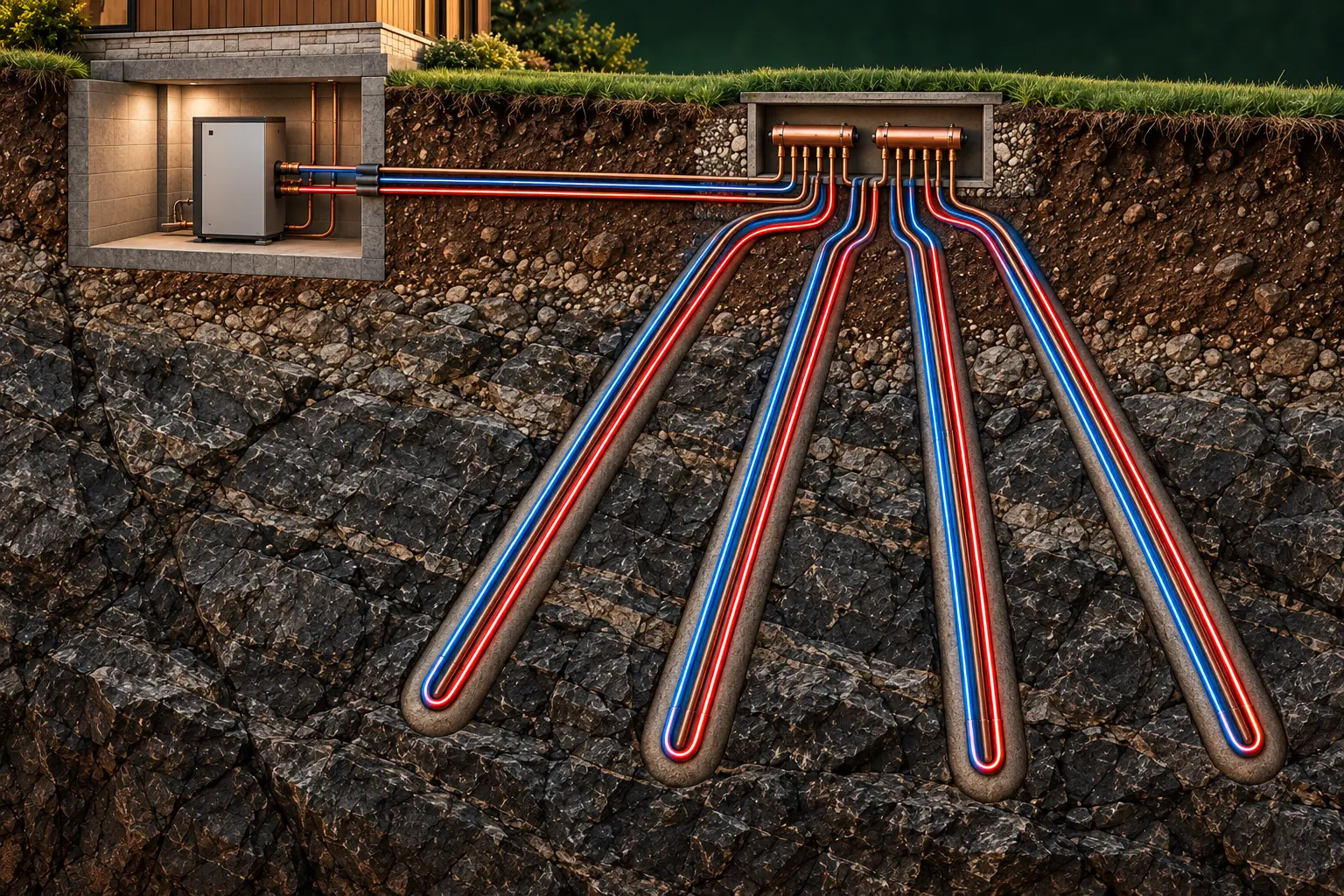
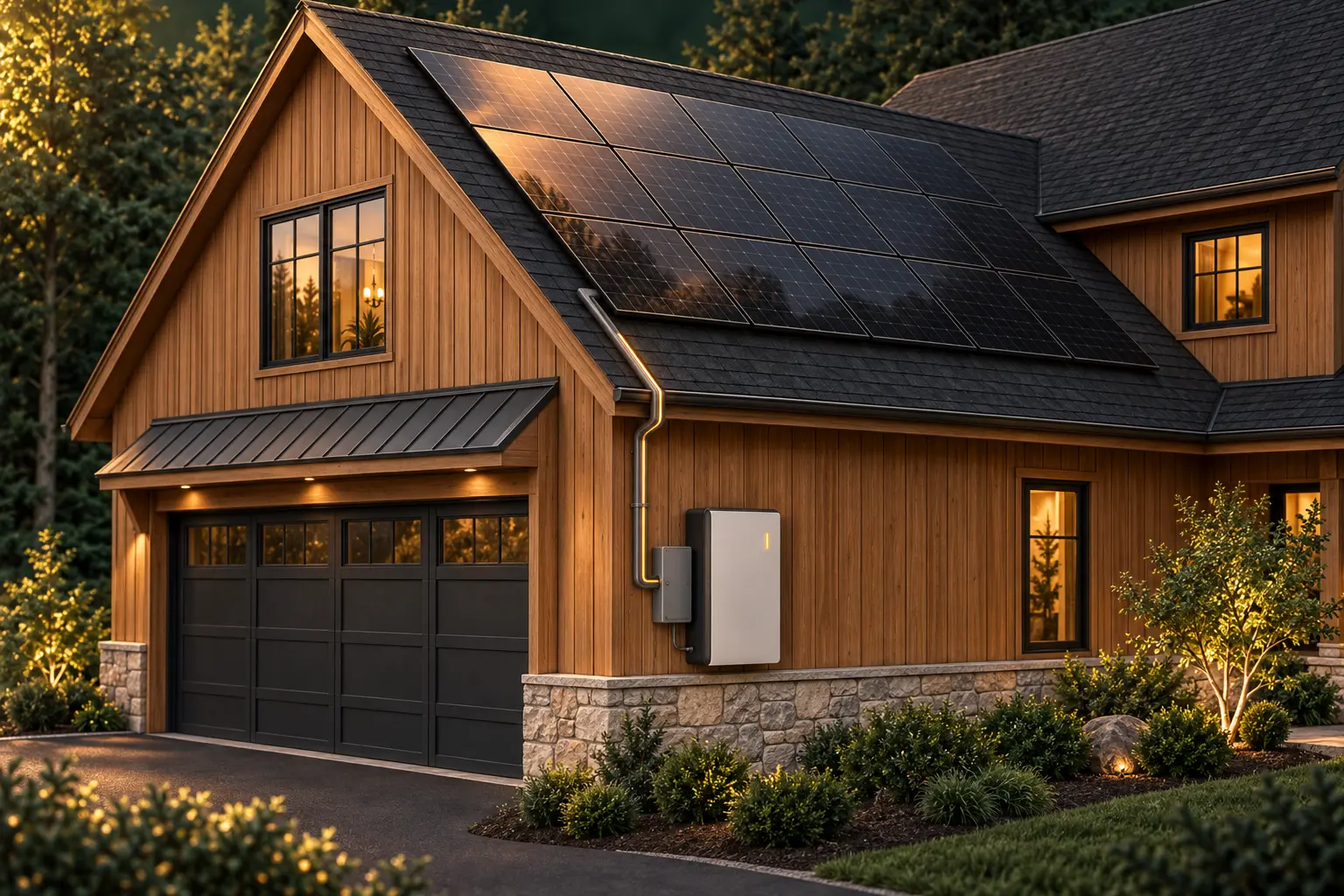
A six-second animation shows the garage side of Lot 13. Sunlight reaches the rooftop solar panels and the battery pulses white. Red and blue underground tubing illustrates geothermal heat exchange as summer changes to a snowy winter.
Live beautifully.
Tread lightly.
A home that feels extraordinary, with energy systems that work beautifully together.
Geothermal · Solar · Battery
Discover the differenceLower Your Footprint
~6 metric tons
Estimated CO₂ savings each year*
Geothermal draws warmth from the ground to heat your home without burning oil or propane.
Compared with oil heating and central A/C, that’s the CO₂ equivalent of about 15,000 miles of gasoline driving avoided every year.
Slash Your Bill
Nearly 50%
Estimated heating & cooling savings*
About $2,000 saved each year on heating and cooling versus oil heating and central A/C.
Then put your roof to work. Generate your own electricity, store it for the evening and buy less from the grid.
Get Cozy
All year
Warm winters. Cool summers.
Geothermal delivers quieter operation than conventional air-source systems, drawing on stable ground temperatures through winter.
In summer, it cools your home and removes humidity, so rooms feel comfortable even when it’s hot and sticky outside.

About the estimates
Estimated geothermal savings for Lot 13 compared with oil heating and central A/C, before solar. The comparison uses the same house and heating/cooling demand for both systems.
| Annual estimate | Oil + A/C | Geothermal |
|---|---|---|
| Heating & cooling | $4,244 | $2,198 |
| Operational CO₂ | 7.18 metric tons | 0.88 metric tons |
Energy costs. Assumes a 5,600-square-foot home; annual useful heating/cooling demand of 80/25 million BTU; seasonal geothermal heating/cooling COP of 4/5; oil heating at 85% efficiency; and central A/C at SEER 15. At $0.30/kWh and $5.468/gallon oil, estimated annual savings are $2,046, or 48.2%—rounded to “nearly 50%.” Rates use a September 2026 comparison. At $3.694/gallon oil, the same model saves about $830 annually.
Carbon savings. Assumes 0.12 kg CO₂/kWh for grid electricity and 10.19 kg CO₂/gallon oil. The estimated reduction is 6.3 metric tons annually, rounded to about 6. EPA’s approximate gasoline-driving factor of 400 g CO₂/mile makes 6 metric tons equivalent to about 15,000 miles.
These are modeled space-heating and cooling estimates, not measured bills or an installer forecast. They exclude solar and battery effects, hot water, pools, appliances, EVs, fixed charges, maintenance, refrigerant leakage, upstream fuel emissions and manufacturing. Actual savings depend on rates, weather, use and the installed system. The near-50% estimate is not a whole-house bill reduction or a comparison with natural gas or a modern air-source heat pump. Artwork illustrates the energy concept; equipment placement and underground layouts are conceptual.
Sources: NYSERDA fuel prices, EIA fuel emissions, EPA grid data and EPA driving equivalence.
How geothermal works
Copper tubing beneath your property circulates refrigerant to exchange heat with the earth. In winter, the system brings that heat into your home. In summer, it reverses the process, moving heat out of your home and into the ground.
Direct exchange eliminates the separate water-and-antifreeze circuit used in conventional closed-loop geothermal. Geothermal moves existing heat rather than generating it through electric resistance, so it can deliver several units of heat for every unit of electricity it consumes.
Explore geothermal comfort and efficiency with the U.S. Department of Energy.
How solar and storage work
Solar panels turn sunlight into electricity for your home. Battery storage saves energy for later use, including after sunset. Together, they reduce your reliance on electricity purchased from the grid.
For backup during an outage, the installed equipment, supported circuits and available battery charge determine what stays powered and for how long. The Silvermine team will walk you through your home’s configuration.
Open door policy.
Connect directly with the Silvermine team to explore available homes, ask questions and discuss what comes next.
Start a conversation